Bridge what you own
Skyrenth Sentry, an edge appliance, speaks to legacy Wiegand panels, biometric readers and NVRs — including the ones that have never touched an API. Ten minutes at the rack, no wiring changes.
Skyrenth sits over the access controllers, visitor desk, cameras and guard roster you already run — and turns ten thousand daily events into answers a security manager can act on.
A contractor badge opened Gate 3 at 02:14 on Sunday. No work order was raised. Find out what happened and write it up.
✓ Resolved in 41s · 2 persons on 1 swipe at Gate 3 — tailgating. Badge #C-4471 belongs to a vendor whose contract closed 9 days ago. Incident SR-2291 filed, badge revoked, FM notified.
Controllers log every swipe. Cameras record every corridor. Guards fill three books a shift. None of it is joined, none of it is searchable, and by the time an audit asks a question, the answer is buried under four weeks of exports.
No rip-and-replace. Skyrenth reads from the panels, NVRs and registers already installed, correlates them into one timeline, and hands the security team something they can act on the same shift.
Talk to us about your stackSkyrenth Sentry, an edge appliance, speaks to legacy Wiegand panels, biometric readers and NVRs — including the ones that have never touched an API. Ten minutes at the rack, no wiring changes.
Every swipe is matched to a person, a contract, a camera channel and the guard who was on that post. Orphan badges, after-hours entries and tailgating surface on their own.
Alerts go to the person on shift, not to a report nobody opens. Every action leaves an audit trail your client, your tenant and your ISO auditor can read without a phone call.
Visitors, access, incidents and guards run as one system instead of four vendors. Start with the module that hurts most — the rest read from the same timeline when you turn them on.
Walk through the modulesPre-registration and host approval before arrival, ID capture at the gate, repeat-visitor and watchlist matching — and a visitor register that survives a DPDP request.
Continuous review of who holds what door. Badges that outlived their contract, doors nobody should have, permissions nobody re-approved — found weekly instead of at audit time.
Patrol scans that work in a basement with no signal and sync when the phone finds a network. Incidents with owners, SLAs and a paper trail — not a WhatsApp group.
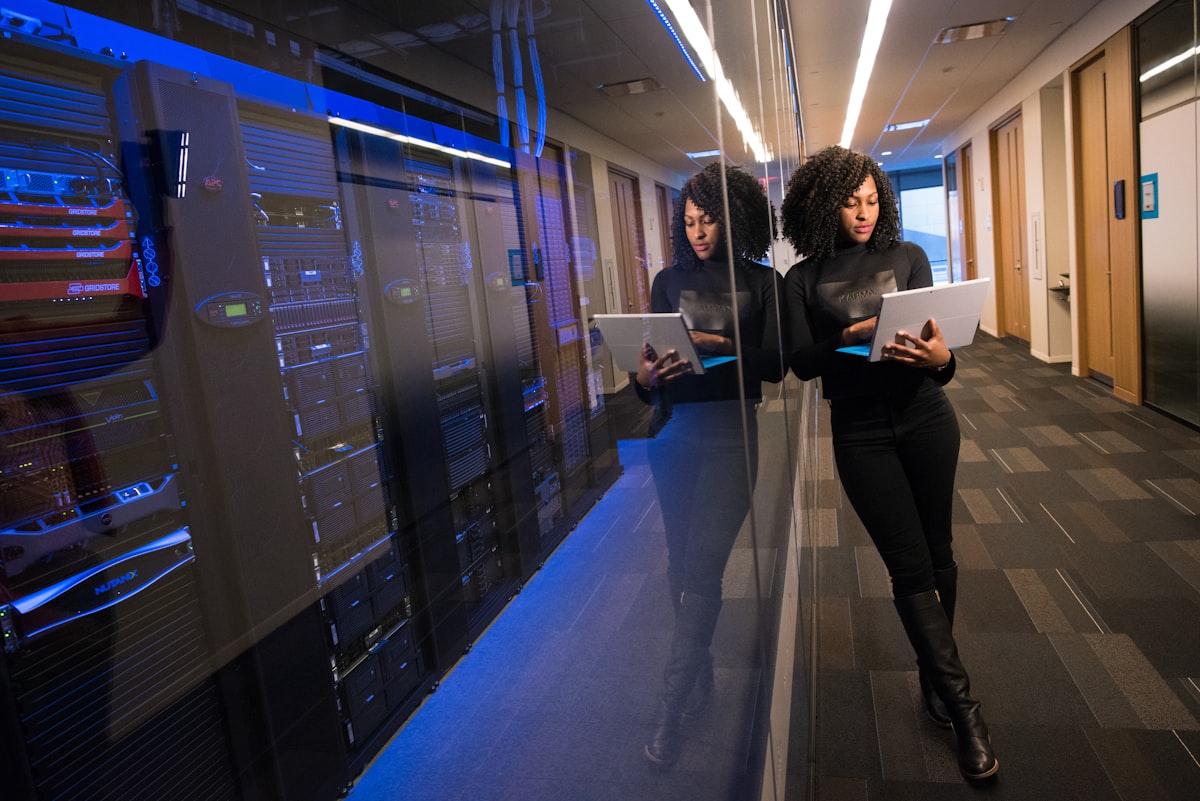
Sentry is a GPU appliance that sits in the security rack. It decodes the camera streams already pointed at your gates, runs detection models on site, and taps the access controller's own output — so a badge event and the frames around it carry the same timestamp, from the same device.
That shared clock is what makes the hard questions answerable. Two people through one swipe is not a review of four hours of footage; it is a count taken at the instant the credential was presented, flagged before the corridor door closes.
Nothing leaves the campus but metadata. Under the DPDP Act, visitor imagery is personal data — so inference runs where the cameras are, and the uplink carries events measured in kilobits, never video.
Counts people through the door at the moment of the swipe. One badge, two bodies, flagged in the same second — no footage review.
Rebuilds where a person went after the gate, stitching corridor and stairwell cameras into a single route.
Live count inside server rooms, R&D labs and pharmacy stores, matched against who badged in.
Helmet and vest checks at the contractor turnstile, logged against the Factory Act record rather than a supervisor's memory.
Plates read at the boom barrier and matched to gate passes, delivery windows and vendor contracts.
Dwell time along walls, stairwells and loading bays, scored against the baseline for that zone and hour.

Matrix, eSSL, ZKTeco, Honeywell, Hikvision, Dahua. If it's already on the wall, the edge bridge reads it. No replacement quote attached to the proposal.
Basements, stairwells, perimeter walls. Guards scan and file with no connectivity; the device queues and syncs the moment it has a network again.
DPDP-aligned visitor data handling, tenant-wise reporting for IT parks and SEZs, and export packs mapped to ISO 27001 and SOC 2 access controls.
Ask in plain language, get the badge path, the footage window and the draft incident. The gap between question and answer stops being three days.
Skyrenth started from a pattern that repeats across every Indian campus: enormous investment in gates, readers and cameras, and almost none in reading what they produce. The equipment isn't the gap. The intelligence layer above it is.
We build for the security manager, not the procurement deck — someone running six gates, forty cameras, a rotating guard force and a client who wants last month's access review by Friday. Shriman leads product and engineering; Dinesh brings the operator's side of the problem, from years spent inside industrial sites where contractors, gate registers and shift handovers are a daily reality. Every design decision answers to that shift.
"A ₹500-crore campus shouldn't have less operational intelligence than a food delivery dashboard."
Skyrenth reads events, not archives. Video stays on your NVR — we reference a channel and a timestamp rather than copying the footage out. Visitor identity data is stored in India, isolated per site, and purged on the retention schedule you set, not ours. Nothing is sold, pooled across customers, or used to train shared models.